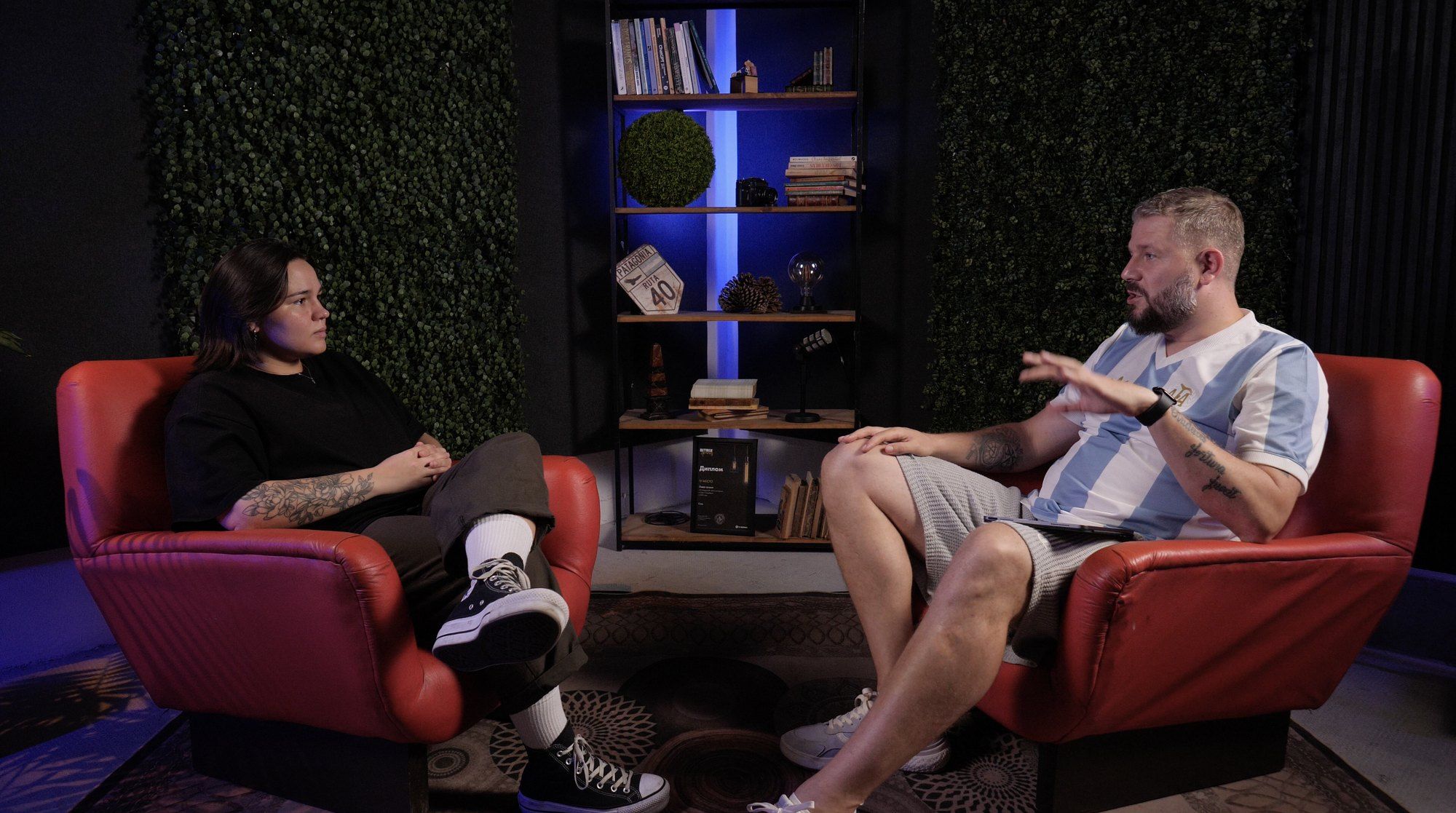
Studio podcast recording is priced per episode rather than per hour of rental, and the room, the gear and the people working the shoot are already in that price. Between “just record it” and “walk out with a finished episode plus social clips” there’s roughly a two-and-a-half-fold difference. Below: what makes up that price, how per-episode pricing differs from hourly, why booking several episodes lowers it, and where cutting costs ends up expensive. Current prices are on the podcast recording page.
What makes up the price of a studio recording
The price comes from three parts: the room, the gear, and the crew’s work during the recording.
The room isn’t just four walls. It includes the set: table, chairs, lighting, background options so the picture matches the style of your particular podcast. It also includes the gear that lives in the studio permanently: cameras, microphones, light fixtures.
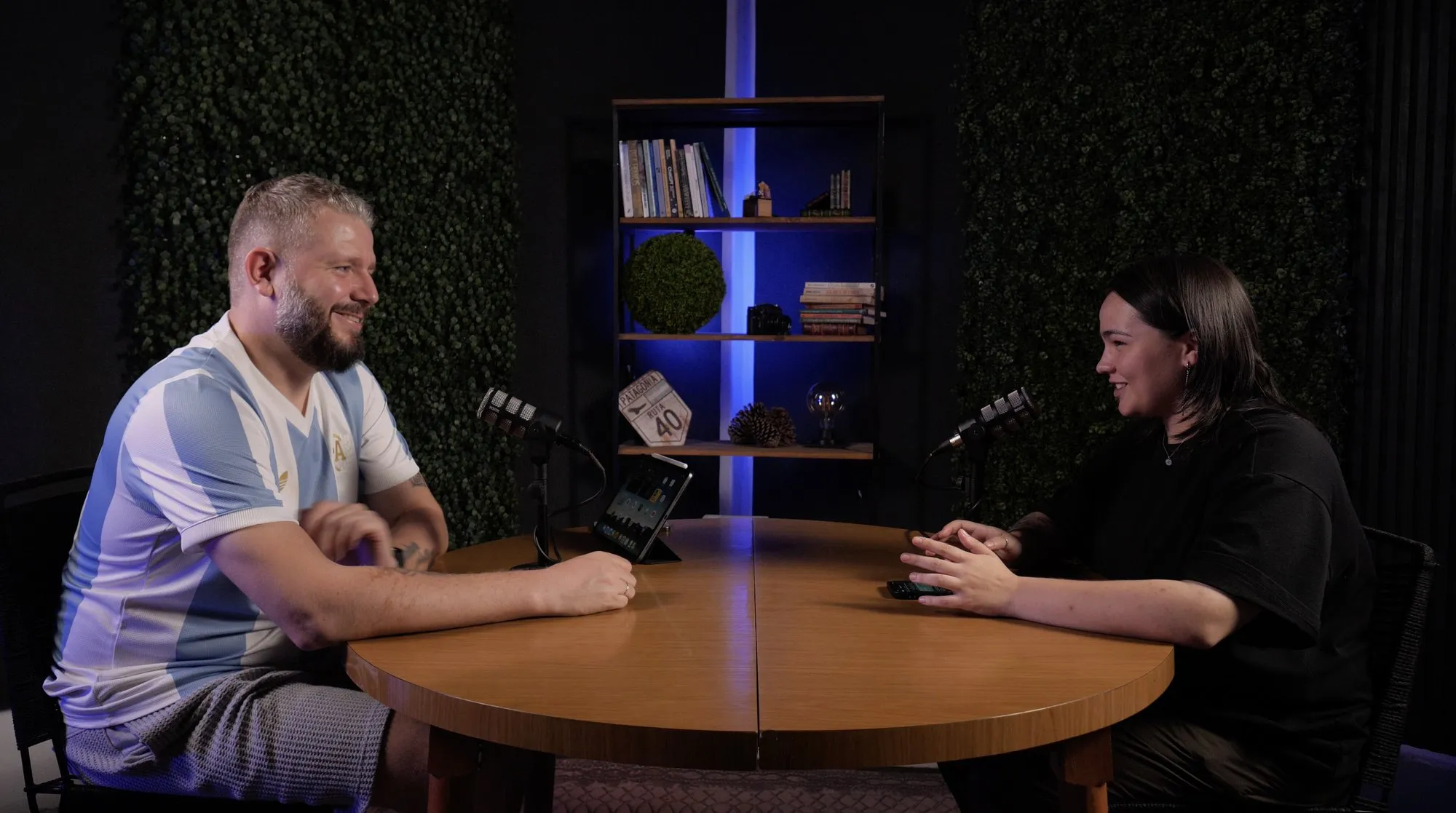
The third part is the people on the floor, and that’s the one studio listings usually don’t show.
A video podcast is shot on three cameras at once: watching an hour-long conversation in a single static frame is hard work, and the shots need to change. Running three cameras alone is impossible — while the operator holds the frame and watches the picture, the assistant handles lighting, sound and equipment. That’s why there are always at least two people on a recording.
The other half of that same line item is experience. Setting light and framing so a person actually looks good can’t be done from a manual: it’s a trained eye, and it takes years. Our floor crew are operators with over ten years behind them — they’ve shot for television, run live broadcasts and made podcasts for YouTube. That expertise is what the price carries: you’re paying for people who know how to make a good episode.
There’s a service not every studio offers: live editing. The episode is assembled during the shoot itself, with a video director switching cameras in real time and deciding whose shot is on screen. You leave the studio with finished material instead of waiting on editing as a separate job. A third person joins the floor for that, and their work is part of the price of such an episode too. If the podcast concept itself needs developing, that’s production, and it’s quoted per project.
With us all of the above is already in the episode price — no separate charges for the operator, the set or the room. There are three options to choose from: a plain recording that hands you raw footage; a recording with live editing; and a turnkey episode with editing and social clips. Editing without a shoot is ordered separately: it’s its own service at its own price.
Why podcast pricing is worth reading per episode, not per hour
Studios quote differently: some charge per hour in the room, others for shooting a complete episode. What you’re actually comparing when you look at two numbers depends on that.
Hourly pricing sells the room. The operator, the lighting setup, the second person on the floor and the finished material are separate line items that surface as the conversation goes, and the total only assembles at the end.
Per-episode pricing sells the result. You know the number before the shoot starts, and it doesn’t grow because the lights had to be moved one more time. That’s how we price: per complete episode of up to two hours.
There’s a flip side, and we’ll say it plainly: if what you need is an empty room for your own gear and your own crew, paying per episode doesn’t work in your favour. That’s a different service — studio rental — and it’s priced by the hour.
Why the per-episode price drops with more shooting volume
Book several episodes at once and each one costs less than shooting them one at a time. There’s no loyalty discount at work here: it’s how a shoot day is built.
The crew preps once: set the lights, sort out the sound, configure the cameras, then pack it all down afterwards. That setup and teardown takes the same amount of time whether you shoot one episode or four back to back — and when there are four, that work is shared between them.
In money the difference shows immediately: eight episodes booked together come out 10–15% cheaper than eight separate shoots. The more episodes you record in one go, the lower the price of each; the same holds for recording with live editing and for turnkey episodes.
There’s a second saving that isn’t money. Recording four episodes in one shoot day closes off a month of content: gather your guests once, prepare once, block out one day once. Then a month without coming back to it or carving out a slot every week.
Before booking, it’s worth settling three things:
- How many episodes a month you’re planning — that decides whether you shoot one at a time or book volume.
- Whether you need editing right away or handle it separately — that’s the choice between recording, live editing and turnkey.
- Whether you can record several episodes in a single day — that’s where the saving appears immediately.
Where cutting costs backfires
People usually cut costs on two things: microphones and video gear. Both show up later, when there’s nothing left to fix them with.
With audio the reasoning tends to be: record it however it comes out, AI will clean it up in post. That only works up to a point. It will take out noise, but not overload: iZotope, which builds audio repair tools, says plainly that with clipping the information is lost for good, and repair rebuilds the clipped peaks approximately instead of returning the original waveform. A boomy room is similar: some of the reflection comes out, but the result sounds processed, and a listener on headphones can tell.
Picture works the same way. A frame shot on a cheap camera without proper lighting doesn’t come up in editing to the quality a viewer expects from a video podcast. Cutting costs here eats exactly the thing you decided to shoot video for in the first place.
How to compare studios on price
When comparing prices, people usually look at the first number without checking what stands behind it. The same podcast can cost the same at two studios and mean different things: a room in one case, and a room plus crew plus finished material in the other.
So it’s worth asking three questions:
- What the quoted price includes — just the room, or gear and people as well.
- How many people will be on the floor and who is responsible for lighting and framing.
- What you get at the end: raw footage or an edited episode.
The third point trips people up most. One studio quotes for the shoot and hands over raw files; another quotes for a finished, edited episode. The second number will be noticeably higher, and it’s easy to conclude that studio is more expensive — when it simply includes work you’d have to order separately in the first case.
Can a podcast be recorded for less?
For an audio podcast, yes. A good microphone and a careful recording at home give an acceptable result if the sound is organised properly; what that takes we covered in the article on what you need to record a podcast.
Video is harder: synced multi-camera shooting, set lighting and professional cameras don’t come together at home. Shooting a video podcast for less is possible — one camera, no second person on the floor — and that’s an honest place to start. It’s just worth knowing what you’re trading: not “quality” in the abstract, but the number of angles, the precision of the lighting, and the time editing will take afterwards.
How to get an exact price for your podcast
The final number depends on how many episodes you’re planning, whether you need editing and how the picture should look, so we ask about the project first and quote after. That way you can see what the sum is made of and drop whatever you don’t need.
If you’d like to talk through your podcast and get an exact quote, the terms and the enquiry form are on the podcast recording page in Buenos Aires.