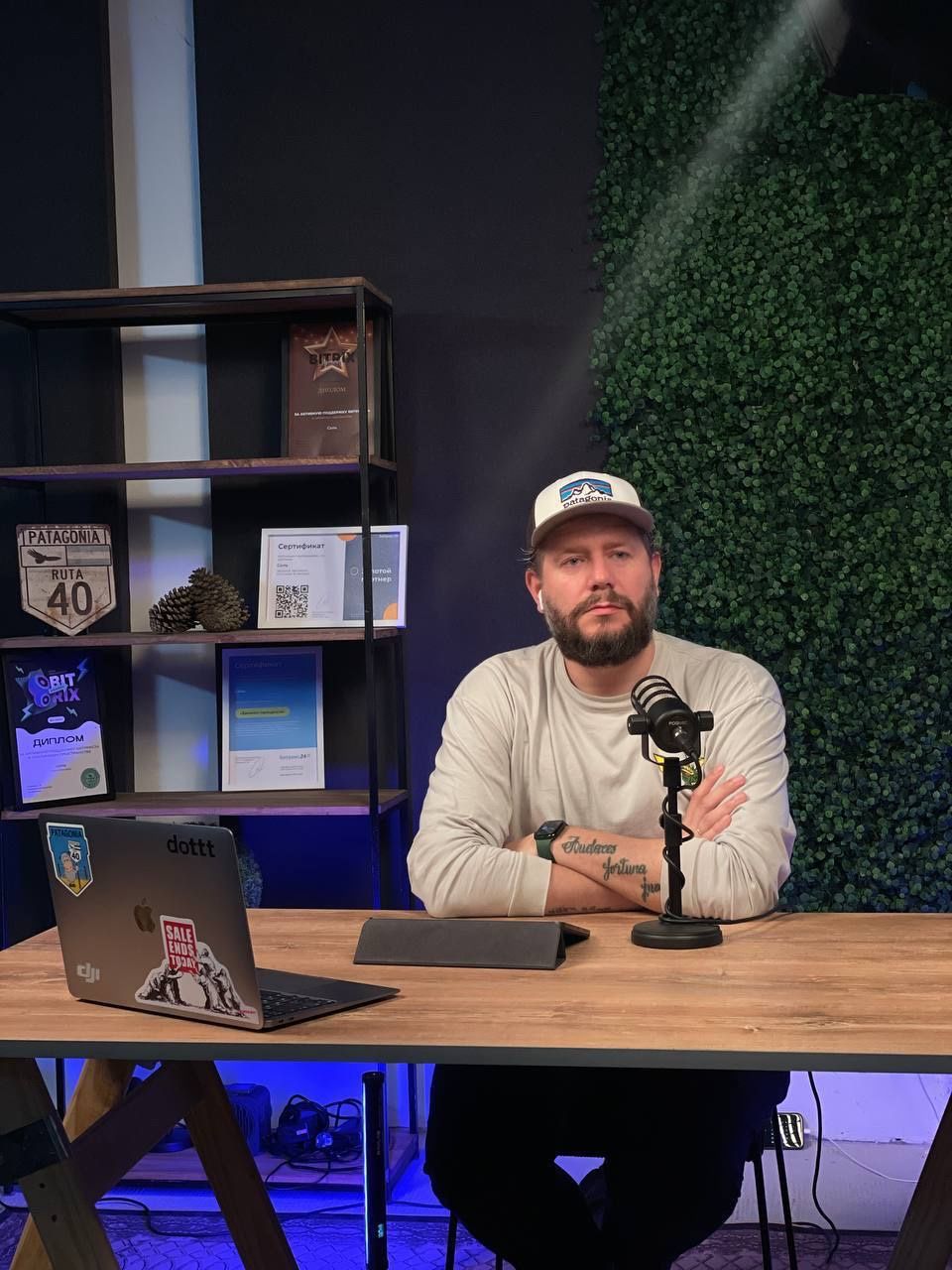
A shoot goes smoothly when you prepare in three places: the day before, with sleep, food and water; in your wardrobe, with clothes that behave well on camera; and in your head, with the order of your ideas instead of a memorized text. After that, preparation depends on the format: a podcast, an online course, an interview and short videos each need different things. Everything about booking and studio time is on the studio page and in the studio rules.
The order of steps
- A few days ahead, decide on the format and how much material you need to record in the session.
- Put together the plan: episode topics, course lessons or interview questions.
- Tell the studio how many people will be on camera and whether you’ll show anything from a laptop.
- Pick two to four outfits following the rules below.
- The night before, get enough sleep and keep your usual routine.
- In the morning: a light breakfast, water, and save the coffee for later.
- Arrive at the start of the session: the first 10–15 minutes go to light and sound.
How to prepare the day before a shoot
The main thing the day before is to sleep well. Adults need at least 7 hours of sleep, according to the CDC, and before a shoot we suggest planning for 7–9. Lack of sleep shows on camera before you can hear it: in the eyes, in the pauses, in a thought that trails off.
In the morning, do whatever helps you wake up: exercise, a walk, a shower. It’s better to arrive on set already awake than to wake up under the lights.
Keep food light: yogurt with fruit, oatmeal, eggs, toast. Nothing fried, nothing greasy and no pastries like medialunas: a shoot day is long, and feeling heavy after a meal makes it hard to keep your pace.
Water is a must. Your voice gets tired during a long recording, and the NIDCD recommends drinking plenty of water and balancing caffeine and alcohol with water.
We suggest saving coffee until the shoot is over. In our experience, speakers find it harder to keep their diction after coffee. The medical center National Jewish Health also advises limiting caffeine before long periods of speaking, and notes that in some people milk increases mucus in the throat, so coffee with milk is also better left for later.
Do I need to memorize my text?
No. Memorized text sounds read on camera: your eyes drift up, your intonation flattens, and one forgotten line ruins the whole take. It’s better to know the order of your ideas and keep a short plan at hand, three to five points per episode or lesson.
Let go of control. If you drift from the plan during the recording but it comes out lively and to the point, don’t stop for the script: that part often sounds better than what you prepared. If you stumble, just say the sentence again; the extra gets cut in editing. The camera operators on set will show you how to hold yourself on camera and where to look.
If the format needs word-for-word text — for example, legal wording or figures that can’t be mixed up — it goes on the teleprompter. The studio has one; it’s best to tell us in advance that you’ll need it, so the text is ready at the start of the session.
What to wear on camera
The main rule is to look natural in your own context. It should feel as if we’ve pulled you away from your usual work for a minute: a doctor in a white coat, an athlete in sportswear, a lawyer in their work clothes.
Colors that look good on camera: navy, dark green, dark red, gray. A plain fabric without shine is the safest choice.
What works badly:
- Thin stripes, small checks, herringbone, small patterns. A repeating pattern lines up with the pixel grid of the camera sensor, and the fabric starts to shimmer in the shot. This is moiré, and it can hardly be removed in editing.
- A bright white shirt without a jacket. Under the lights it becomes the brightest spot in the frame and competes with your face. University video studios also advise against bright white, deep black and skin-colored clothing (Columbia School of Social Work).
- Large logos and loud prints. They pull attention away from your face, and someone else’s brand in the frame makes it harder to use the video in advertising later.
- Noisy jewelry. Bracelets and chains tap the table and brush the lavalier microphone, and the microphone picks that up along with your voice.
- Green on a green screen. If we’re shooting on a green screen, green and shiny clothing blends into it (Adobe), and in editing part of the person disappears along with the background.
Bring two to four options. On set, under the lights and against the background, you can see which one looks best, and the camera operator will help you choose.
How to prepare for a podcast recording
In a podcast, the people and the plan of the conversation matter most. Send your guests the topics in advance: people are calmer when they know what they’ll be asked about, and their answers have more substance.
The host should prepare an episode plan in several blocks and a couple of questions to ask again in a separate short take for social media. Sound, script and short clips from the episode are covered in detail in the article what you need to record a podcast.
The studio needs to know in advance how many people will be on camera: microphones, chairs and setup time depend on it. If a guest joins remotely, mention it when you book. How we run a recording is on the podcast recording page.
How to prepare for recording an online course
A course is recorded lesson by lesson, so before the shoot you need a list of lessons in recording order and a short plan for each. The more precise the list, the more lessons you record in one session: time isn’t spent deciding what to say next.
Prepare your slides in landscape format and bring them on a USB drive or a laptop. If you’ll show something from your own laptop, mention it when you book: the camera operator will set aside time to connect it.
If the course is shot over several days, wear the same outfit each day or decide in advance which lesson changes clothes. Otherwise, in the edited course, back-to-back lessons will look like they were recorded by different people.
We record courses in a “presenter on camera plus slides” format. We don’t shoot fitness, cooking or beauty courses: they need different angles and equipment. More on the online course recording page.
How to prepare for an interview
Both sides prepare for an interview: the one asking and the one answering. The interviewer prepares the questions and the order of the blocks. For the guest, knowing the topics and the format is enough: a spontaneous answer sounds better than a rehearsed one.
Agree in advance where the guest looks: at the interviewer or into the camera. It changes how cameras and lights are placed, and on set this is decided before the first sentence, not after the first take.
How to prepare for expert videos and Reels
A series of short videos needs a list of topics, one idea per video. Several videos are usually recorded in one session, so two to four outfits are especially useful here: a change of look helps tell the videos apart in the feed.
Think through the first sentence of each video in advance. In a short video it decides whether people keep watching, and it’s worth recording in several takes. How we shoot vertical videos is on the Reels and TikTok page.
What to bring to the studio
- two to four outfits;
- the episode plan, the list of lessons or the questions;
- slides, a USB drive or a laptop, if you’re showing material;
- water;
- your own items for the shot, if needed: products, books, props.
There is no makeup artist at the studio. There is a place to change and do your makeup, and you are welcome to bring your own makeup artist.
You can bring your own props. Confetti, glitter and work with food should be agreed in advance: we do these shoots, but we prepare for them separately.
What most often spoils a shoot day
- Arriving late. The session ends at the agreed time, and being late doesn’t extend it: there is simply less net recording time.
- One small-check shirt and no spare. The moiré shows right away, and there’s nothing to change into.
- Memorized text. The speaker stumbles on the first forgotten sentence and restarts the take, instead of saying the idea in their own words.
- A plan that appears only at the studio. When topics are decided on the spot, it eats into session time.
- A laptop nobody mentioned. Connecting your own equipment without warning takes minutes away from the recording.
What you can prepare yourself
Almost everything in this checklist is your part of the work: sleep, food, clothes, the plan and the slides. The studio can’t do it for you, and it decides how you will sound and look.
Our part is light, sound and framing, and the camera operators will tell you which look works best against the background, how to hold yourself on camera and where to look. That happens on set, for each person, and nothing needs to be prepared for it in advance. If you’re unsure about clothes or format, send us a photo or a question before the shoot and we’ll sort it out ahead of time.
You can choose a time and format on the studio page.